Plus Closet
Creating a marketplace to bring the spotlight to a marginalized community
My Role
My Team
Project Timeline
Tools Used
Welcome to Plus Closet!
Problem
Plus-sized women have a lack of options and opportunities when it comes to shopping.
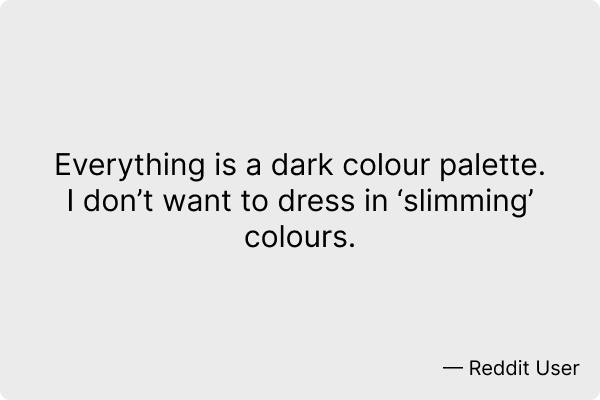
I love finding new fashion styles and trends as much as any other person (I prefer streetwear), but not everyone gets that chance. User research indicates that plus-sized women are often marginalized in the fashion industry and they feel that they aren't given a chance to be fashionable.
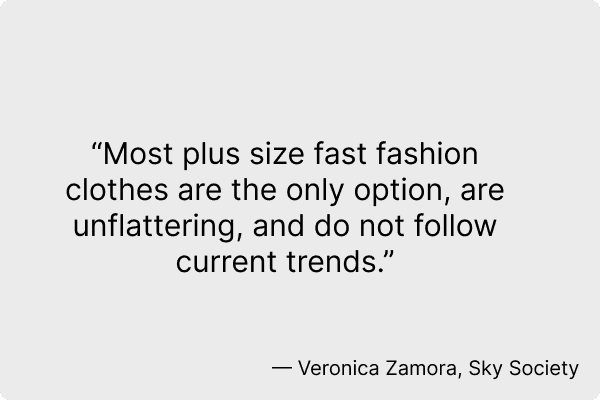
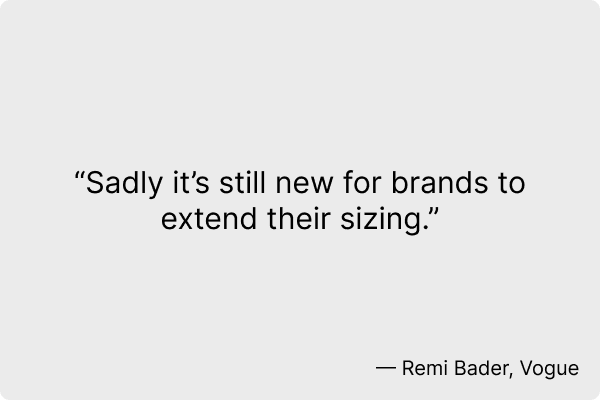
So with that in mind…
How might we build a plus-size resale community that celebrates style, supports sellers, and earns buyer trust?
Solution
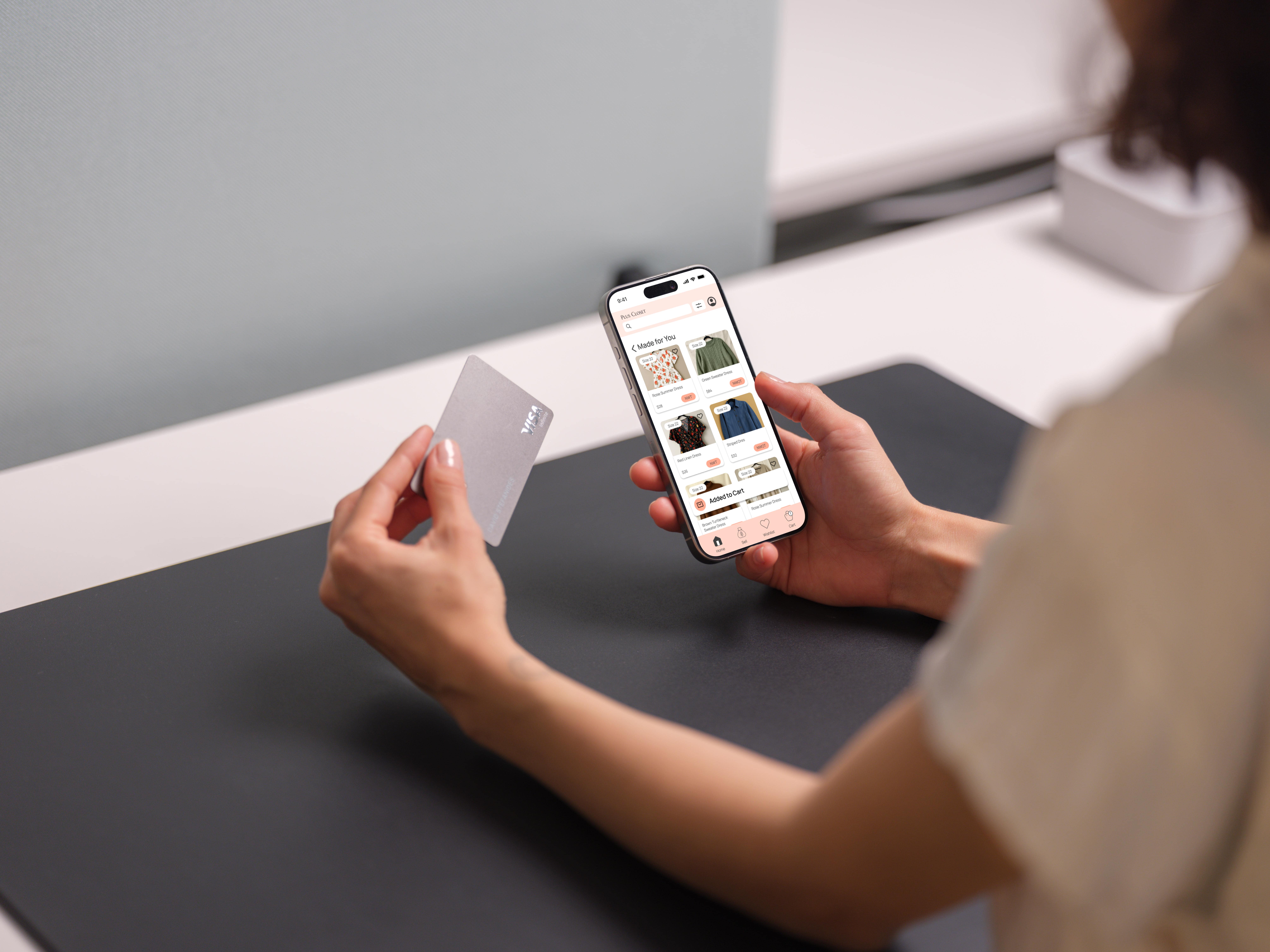
Create an MVP mobile app - combining resale and social media - that will make fashionable clothing more accessible for plus-sized women.
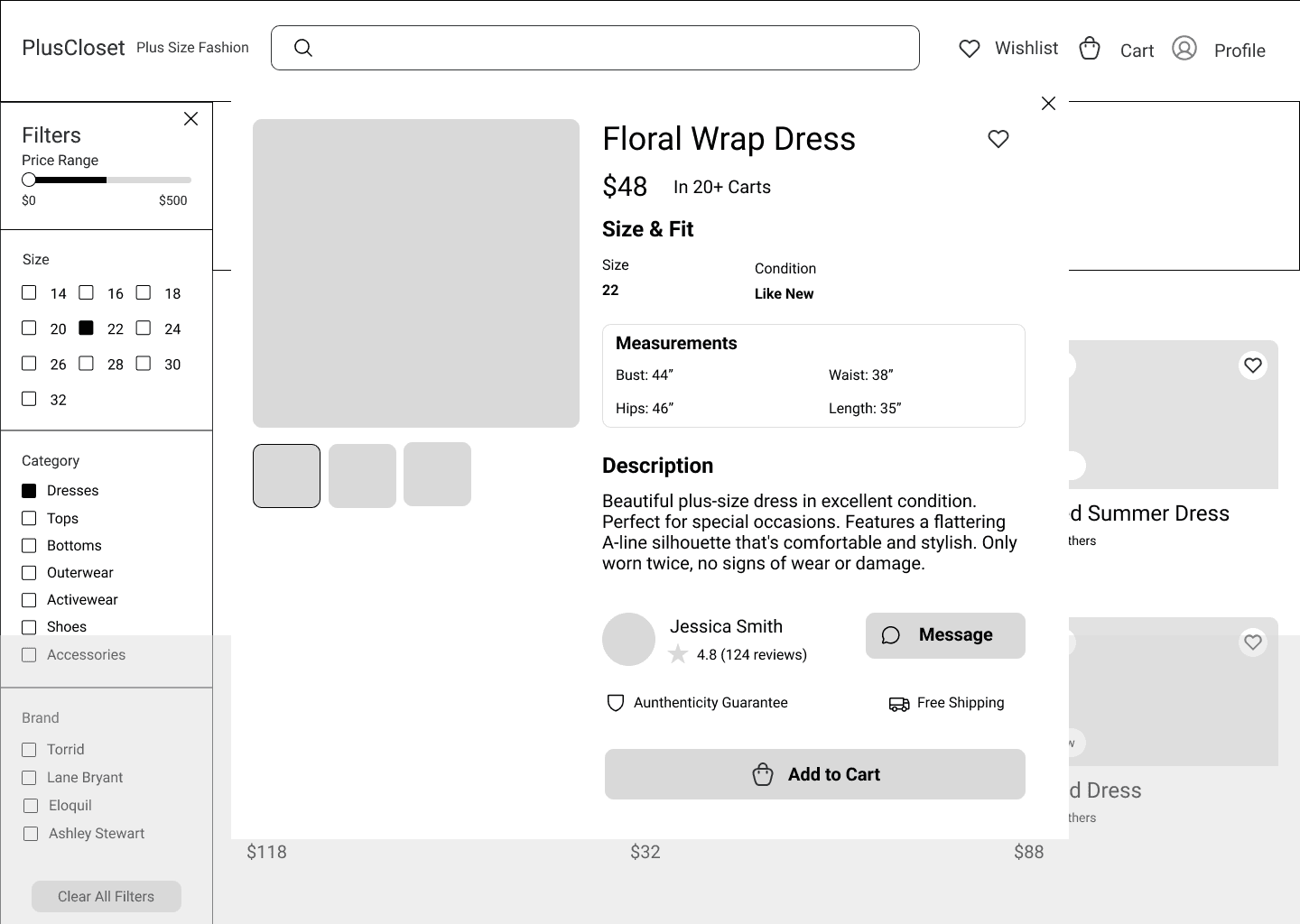
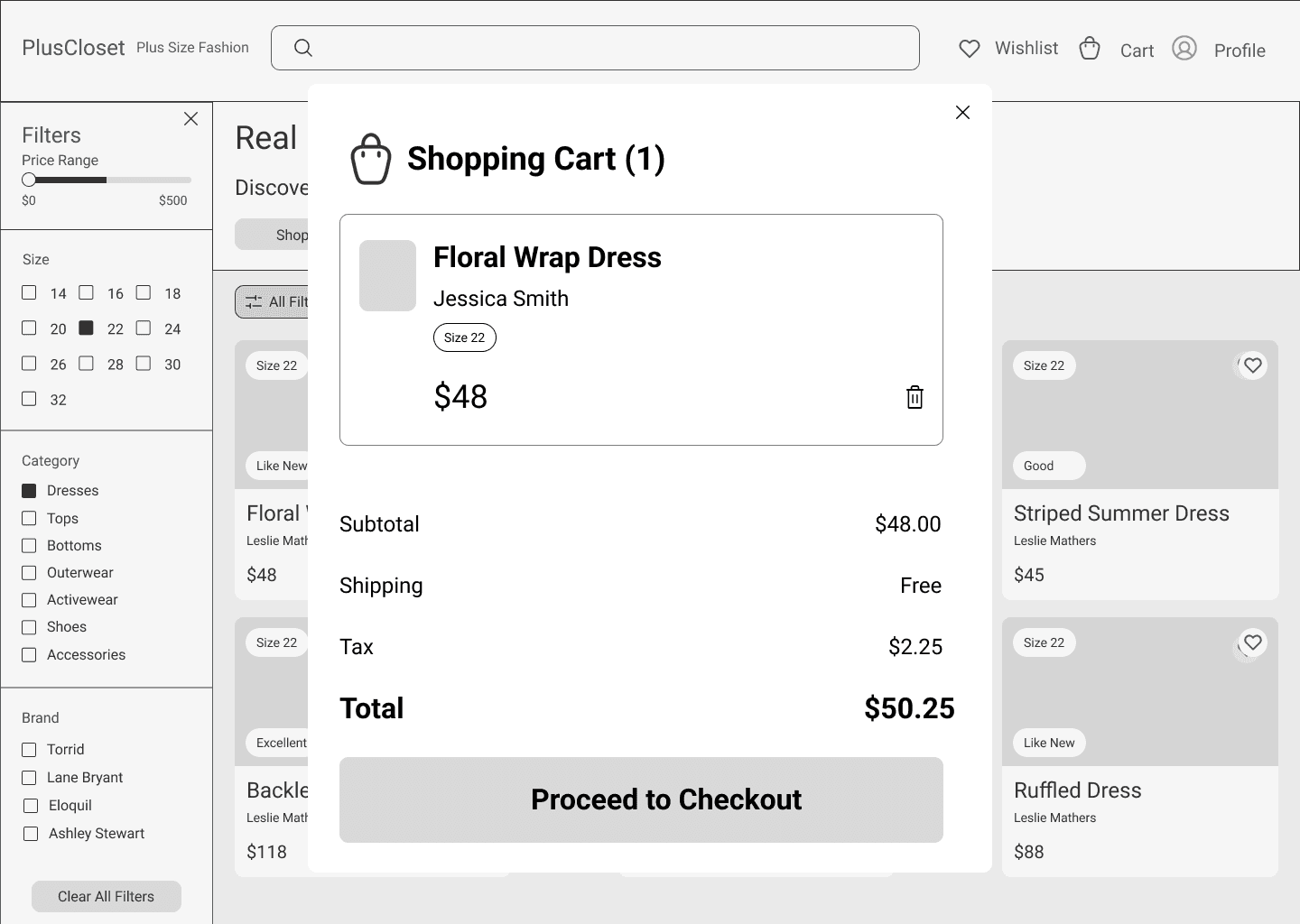
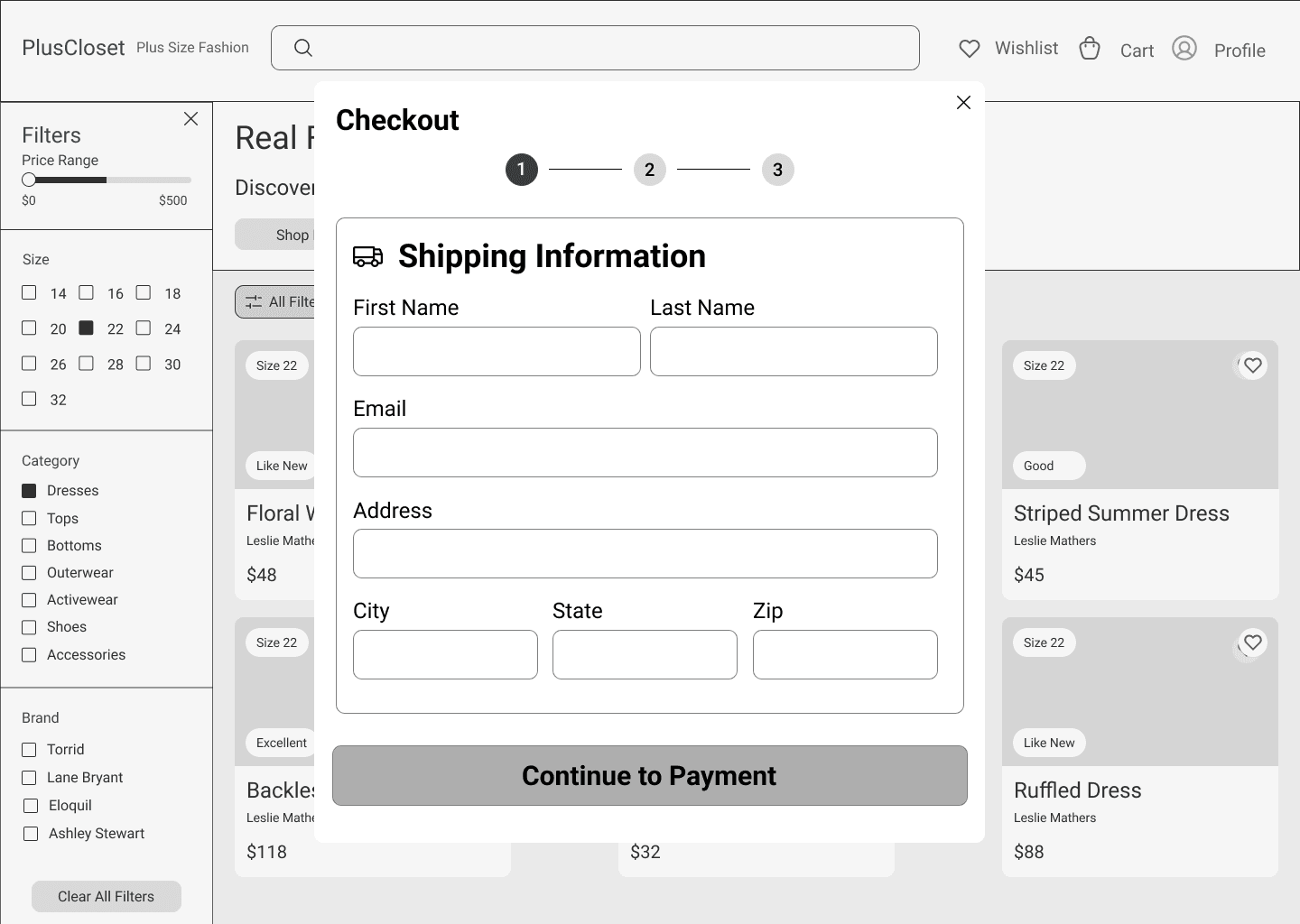
We created an MVP app that will help bring more attention to the plus-size community by building out a platform that was similar to a resale app and social media.
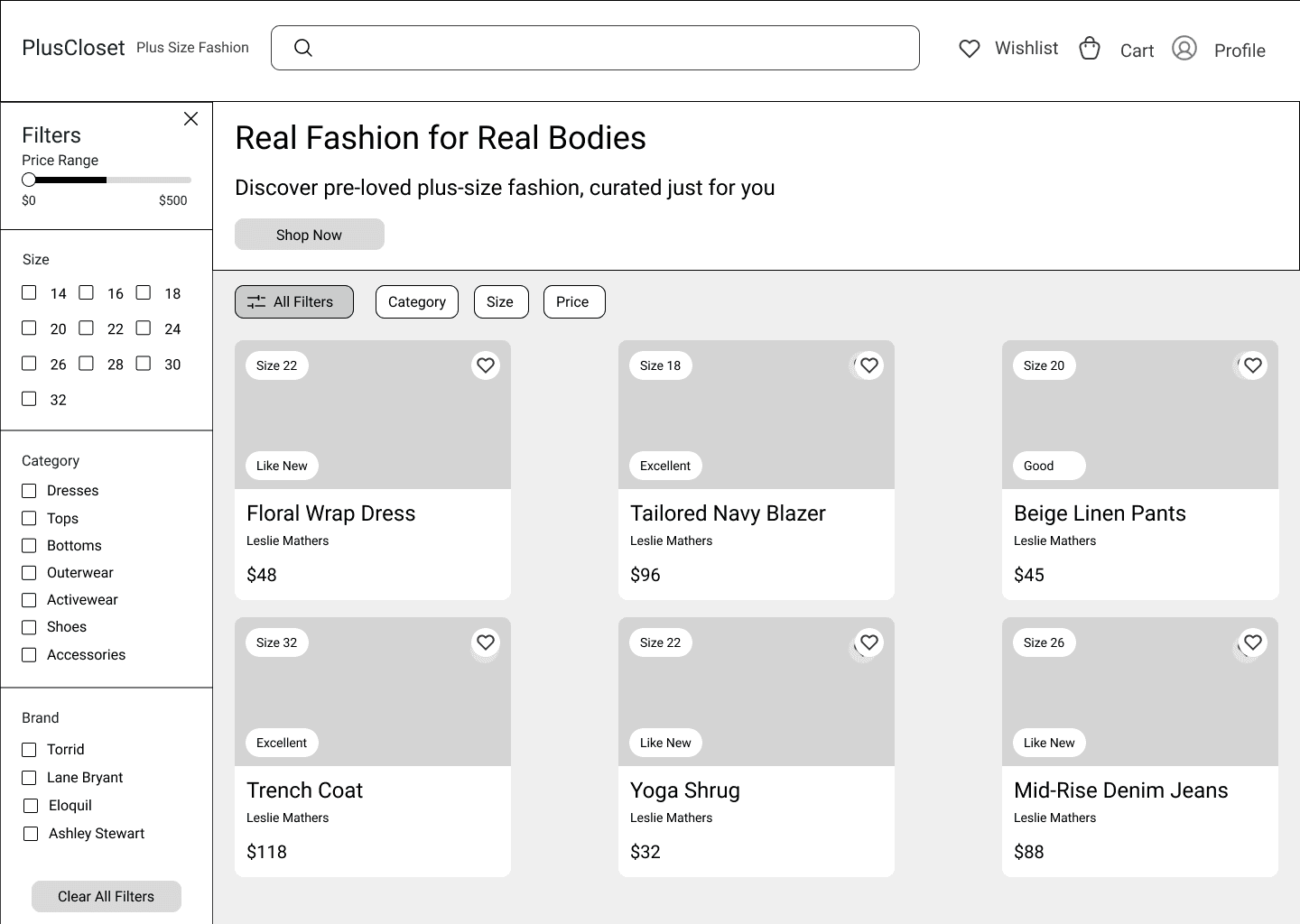
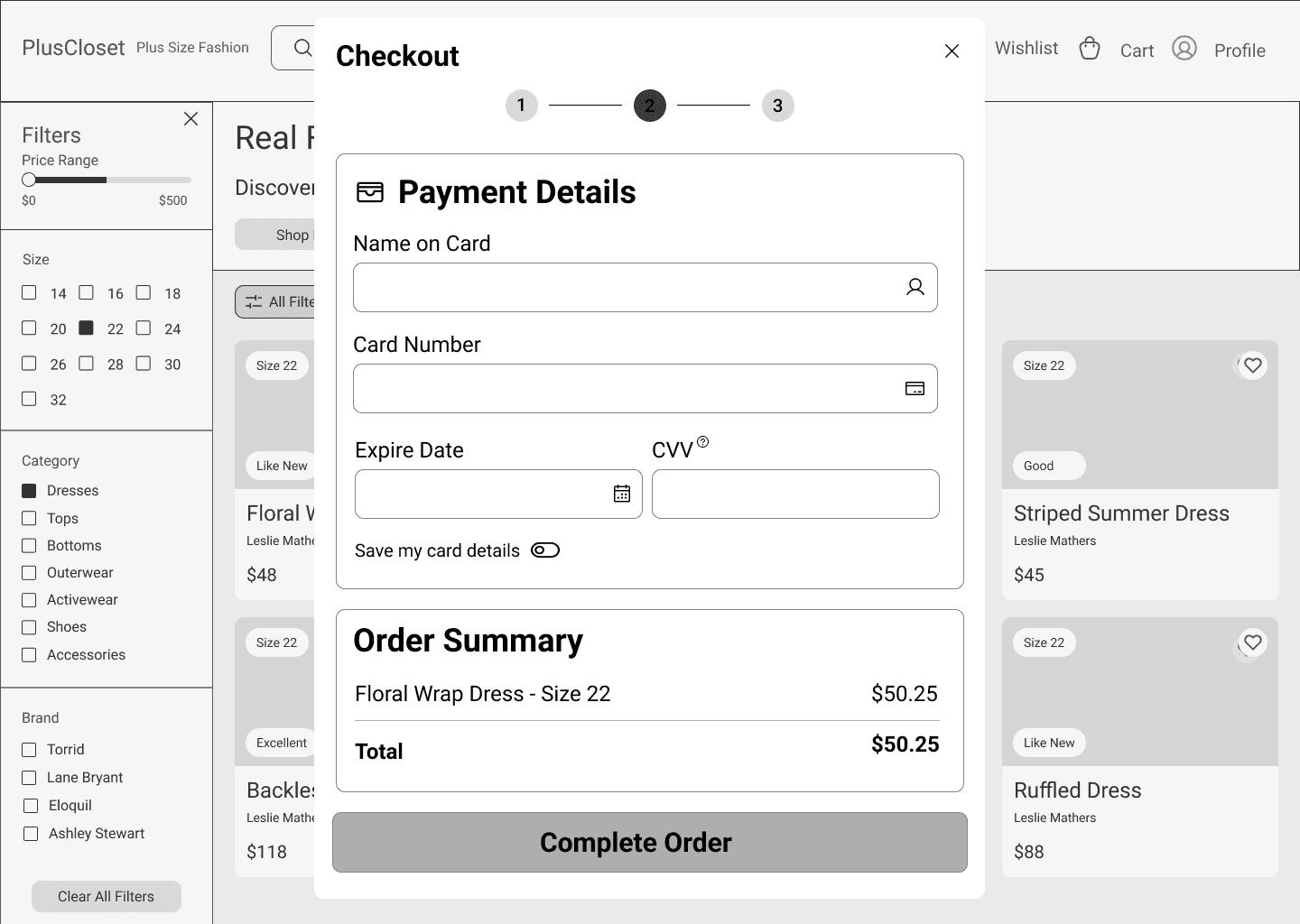
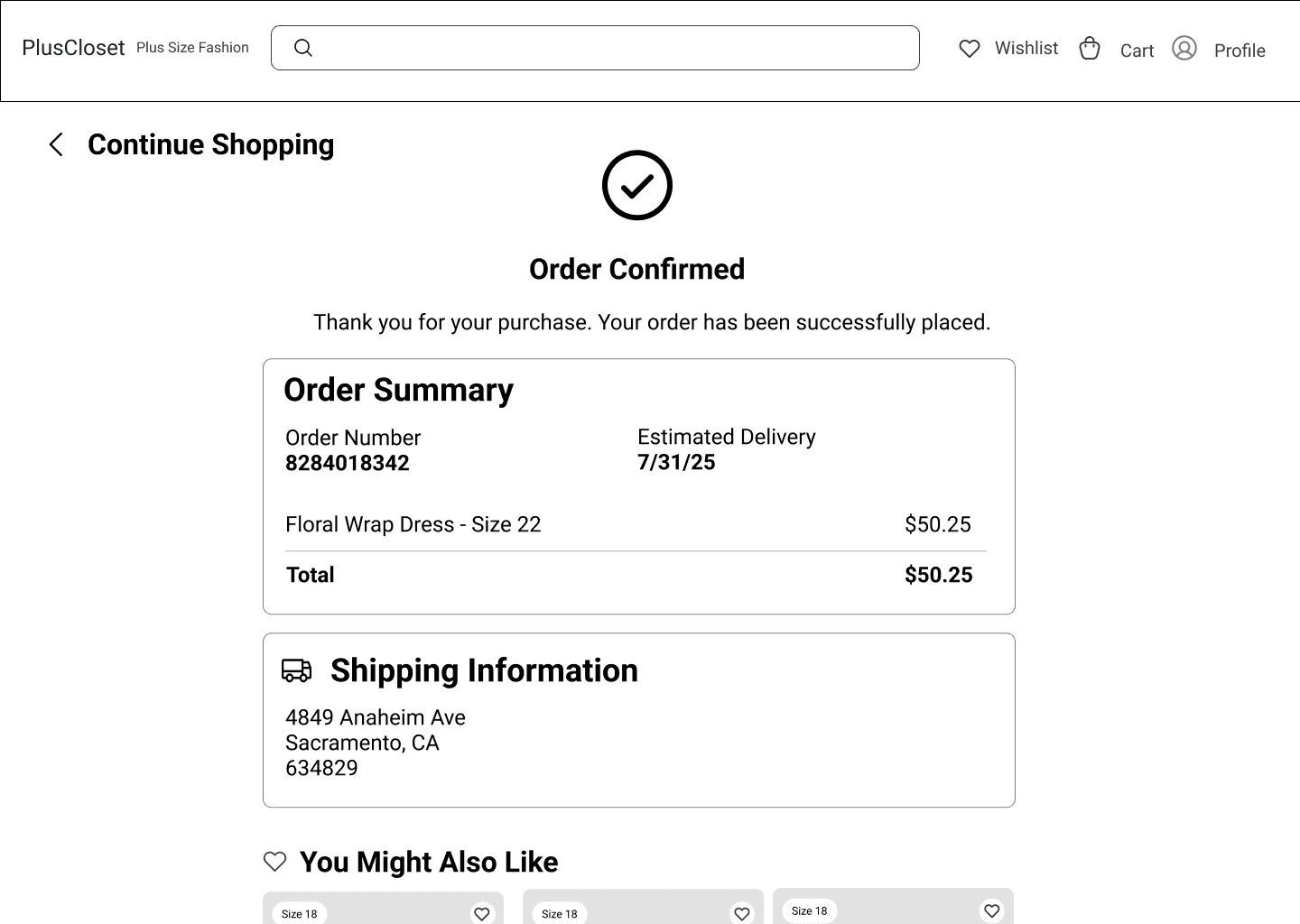
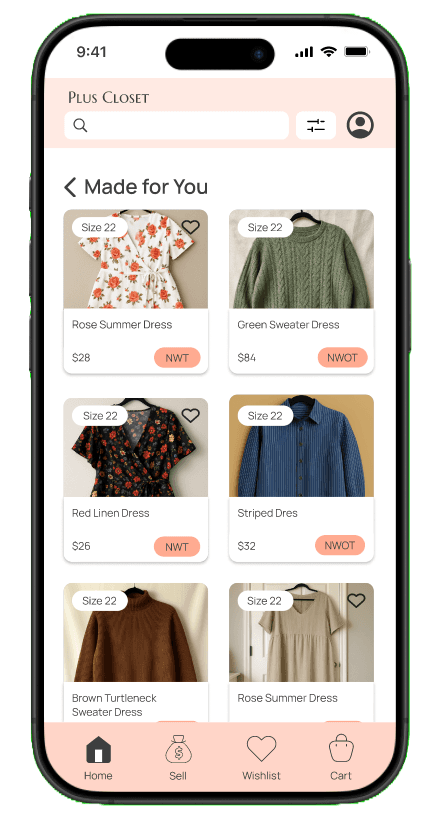
To bring a familiar shopping experience, we designed a simple shop menu with filters that make the search process a lot easier.
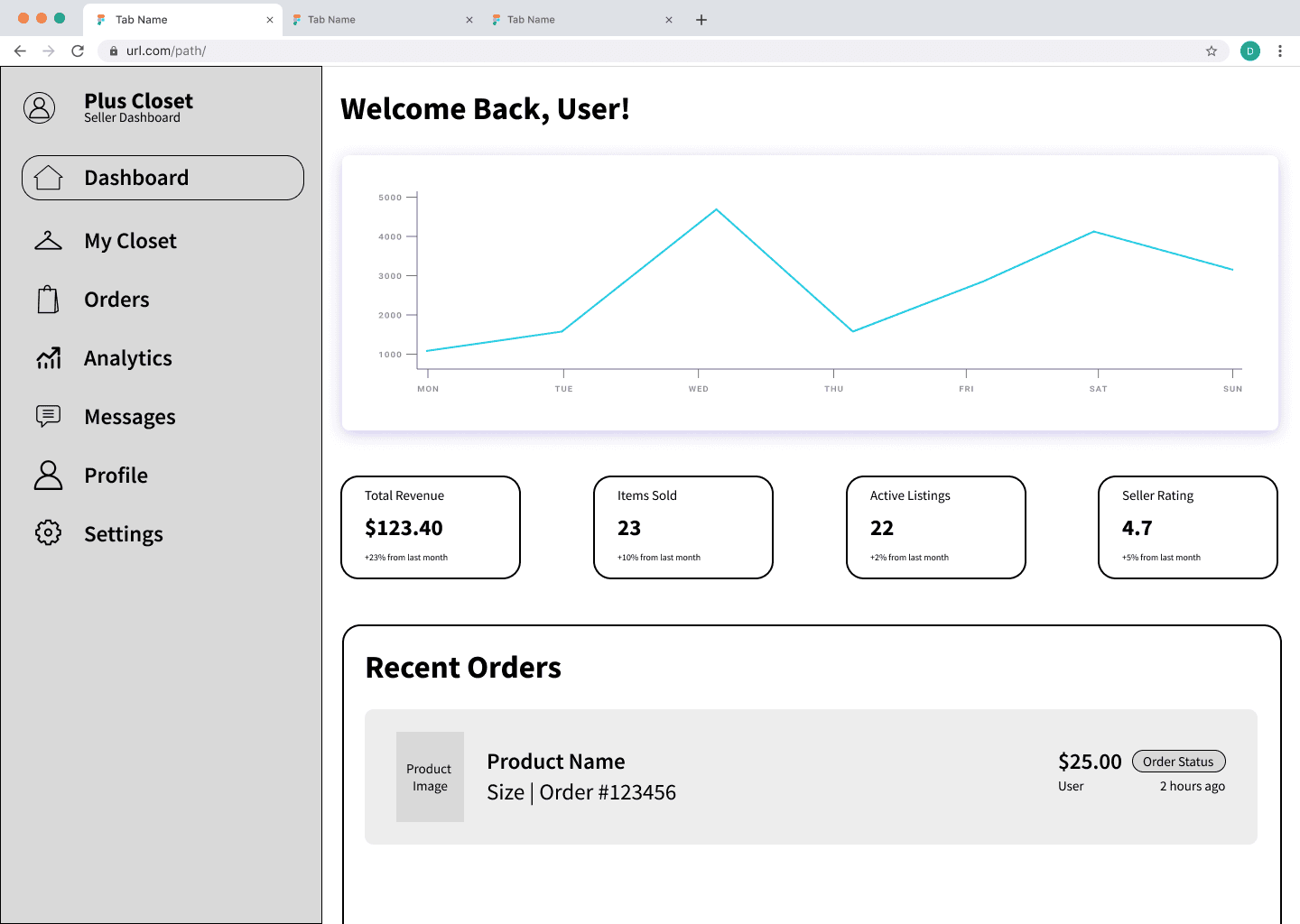
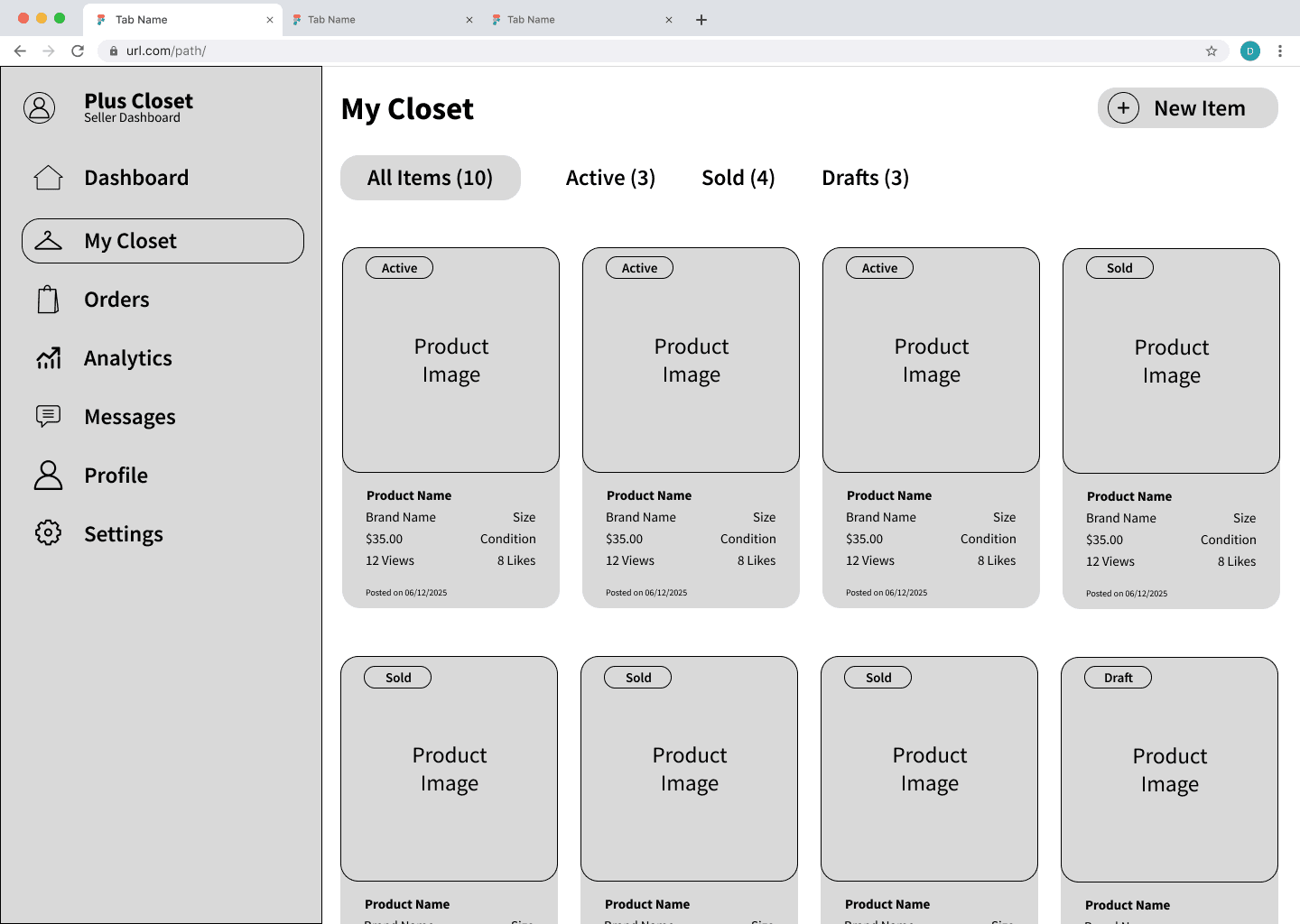
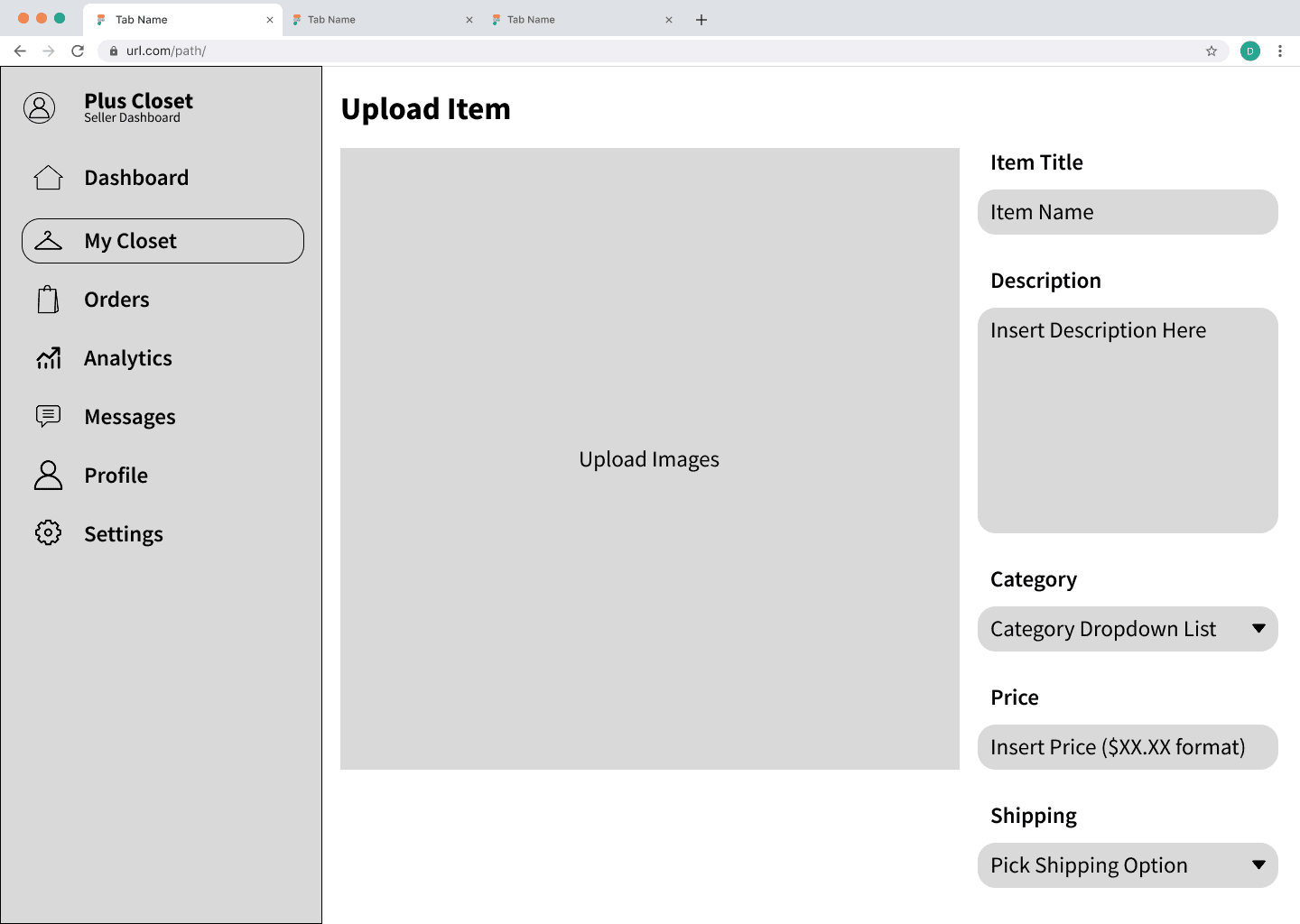
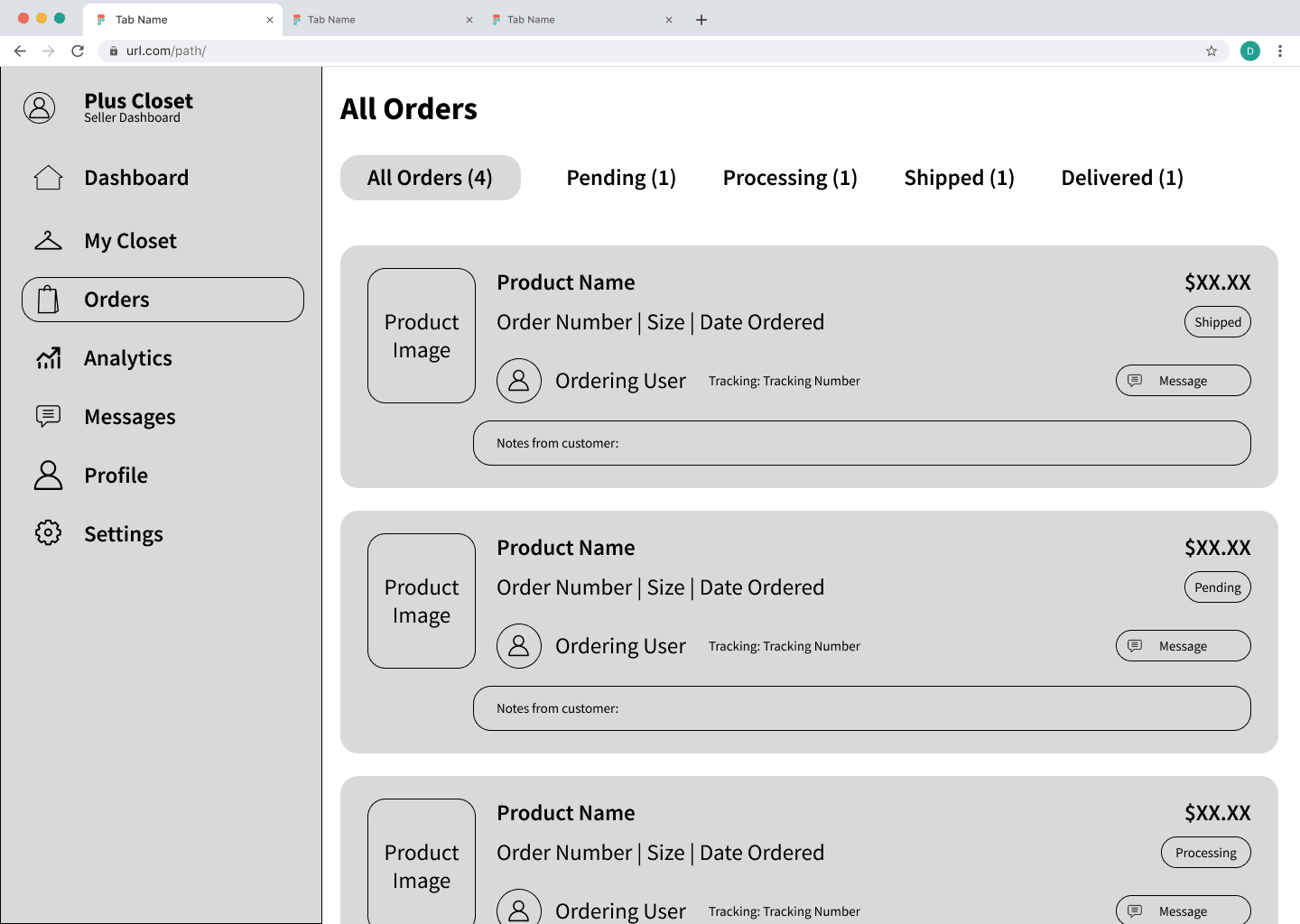
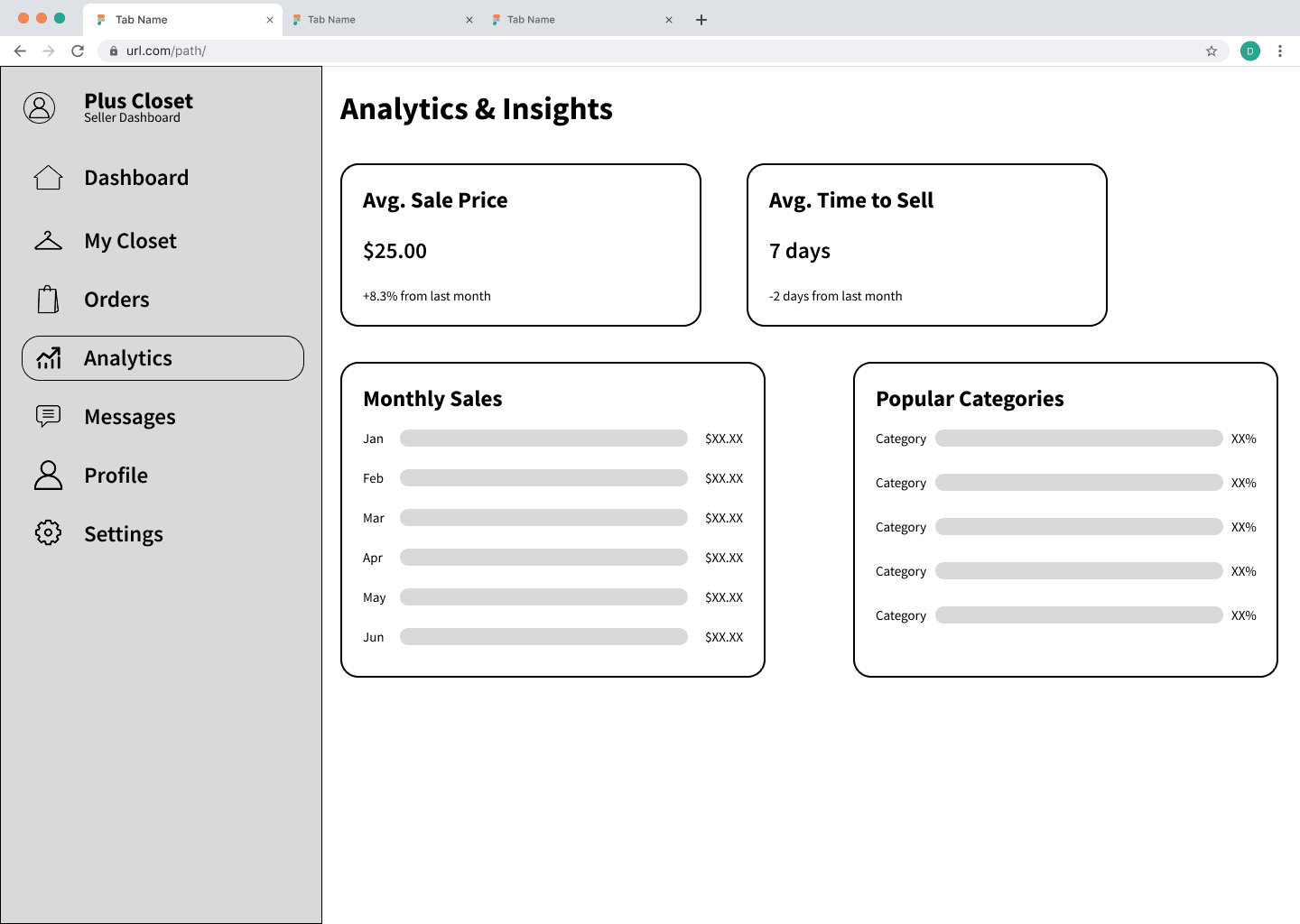
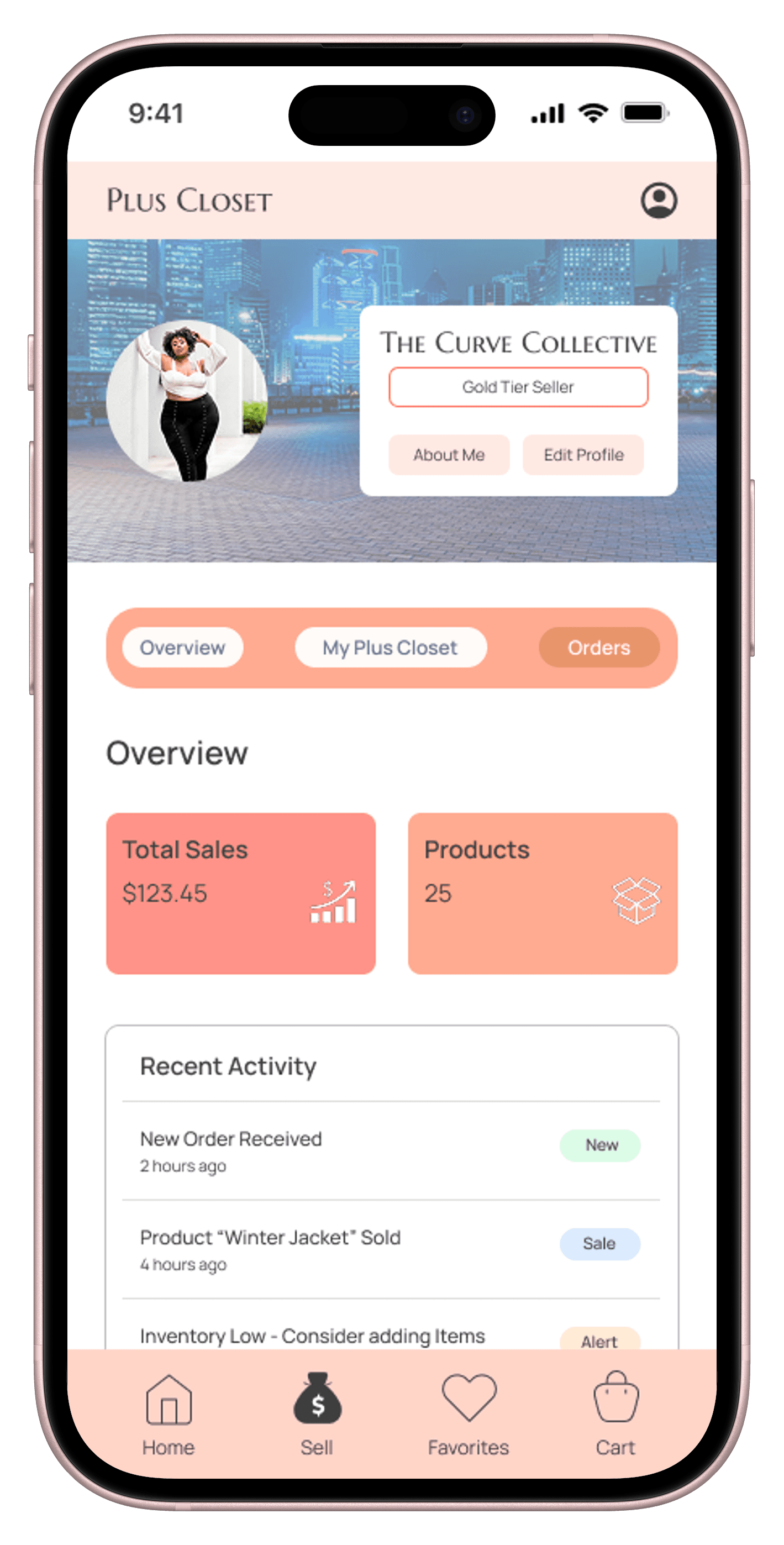
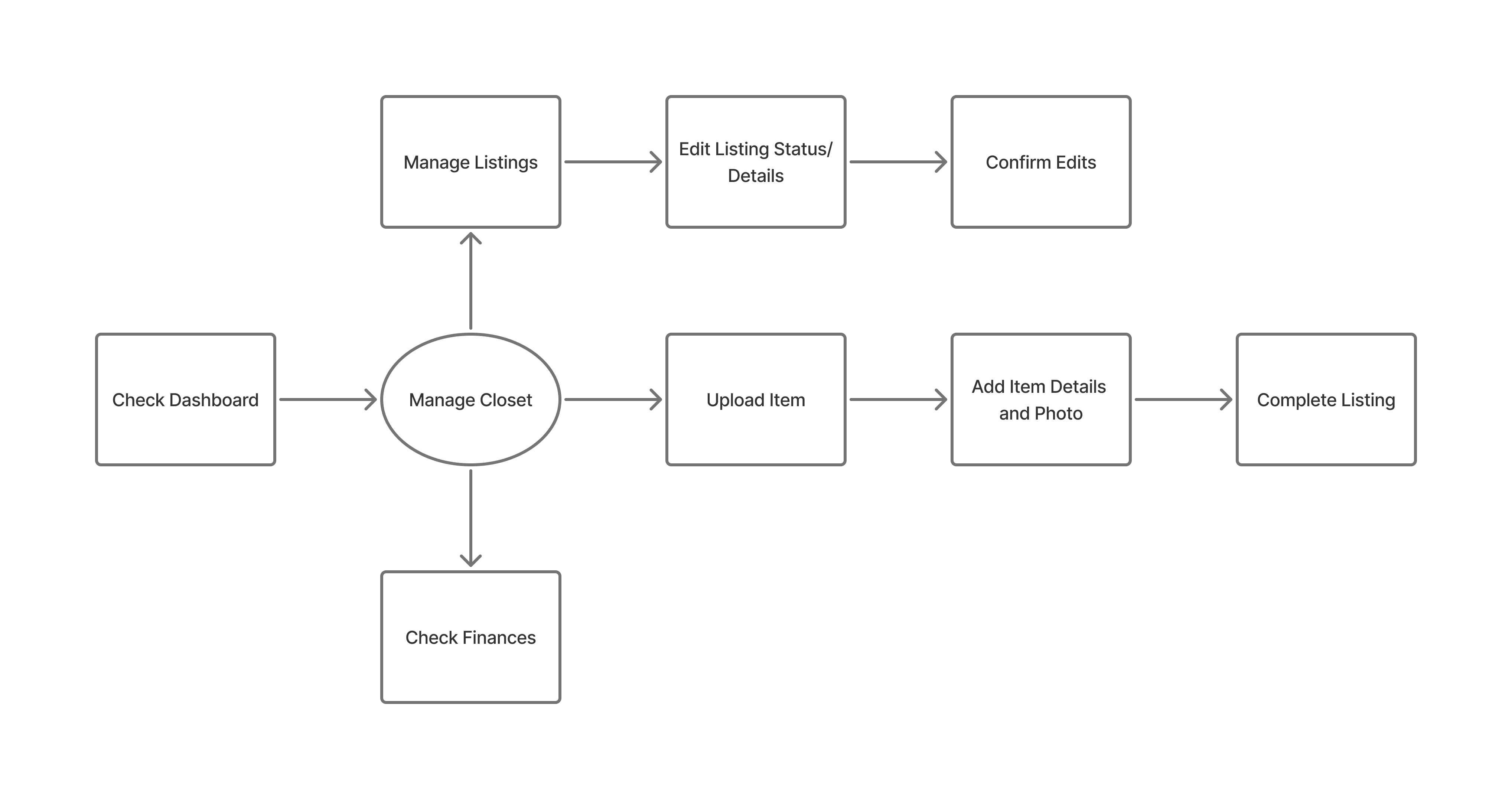
We also created a small comprehensive dashboard for the sellers to make it easier to manage their inventory, sales, and their profiles.
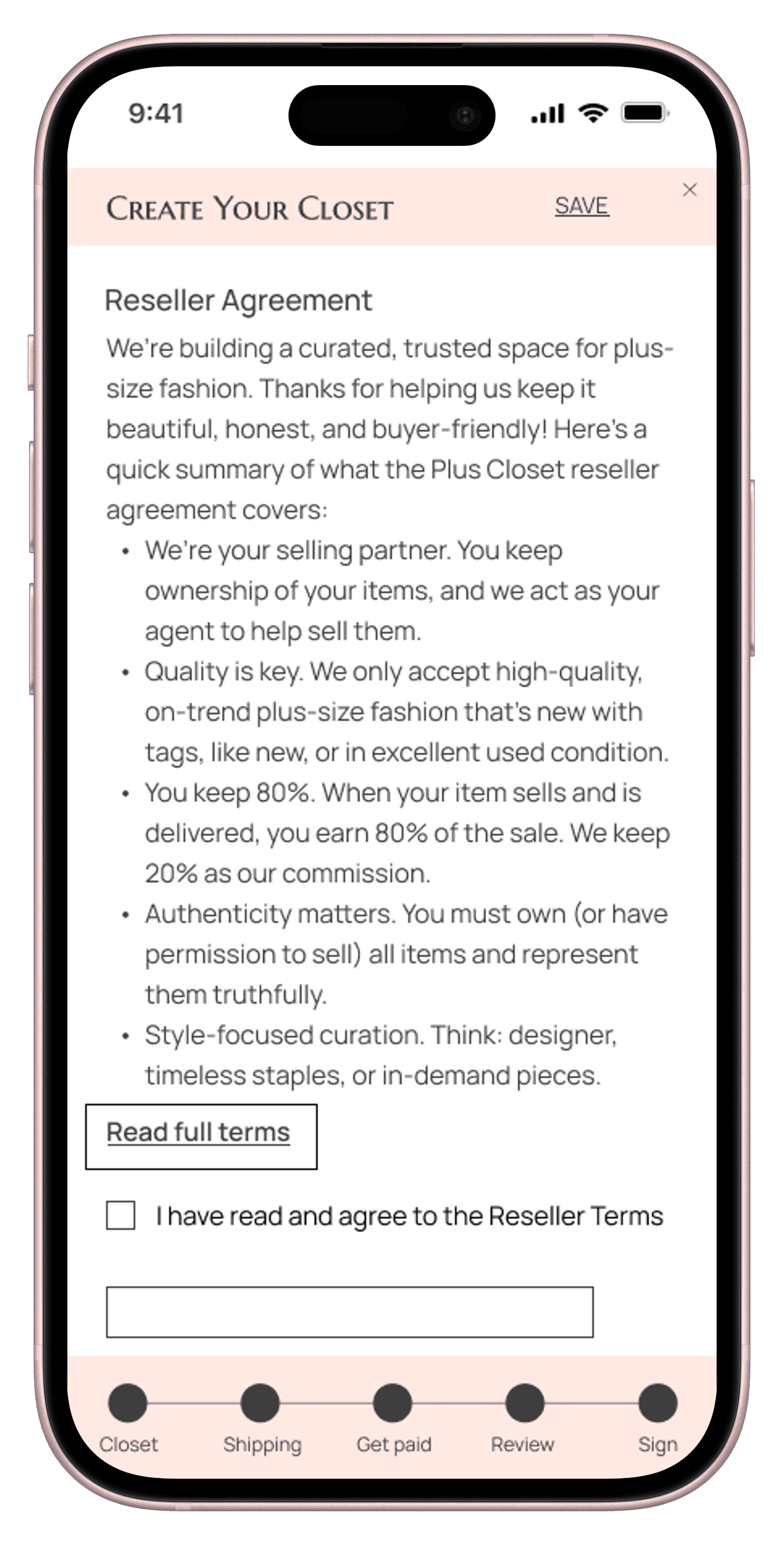
We built out a full onboarding flow that makes it clear on what are the expectations for the clothing sold and for the community.
So What's Working?
My team and I conducted a competitor analysis with apps that are in the resale market to see what made them work for consumers.
We looked at the most popular resale platforms (ThredUp, Depop, Poshmark, and Etsy) and analyzed what made them so popular. These were the main pros we came up with:

App handles many core functions (shipping, listing, pricing, etc.) for users for easy access.

Gives seller full control with robust dashboard and analytics.

Secure finances and built-in community features called "Posh Parties."

Creates a social media-like environment to help users connect with sellers and with each other.
Mapping It Out
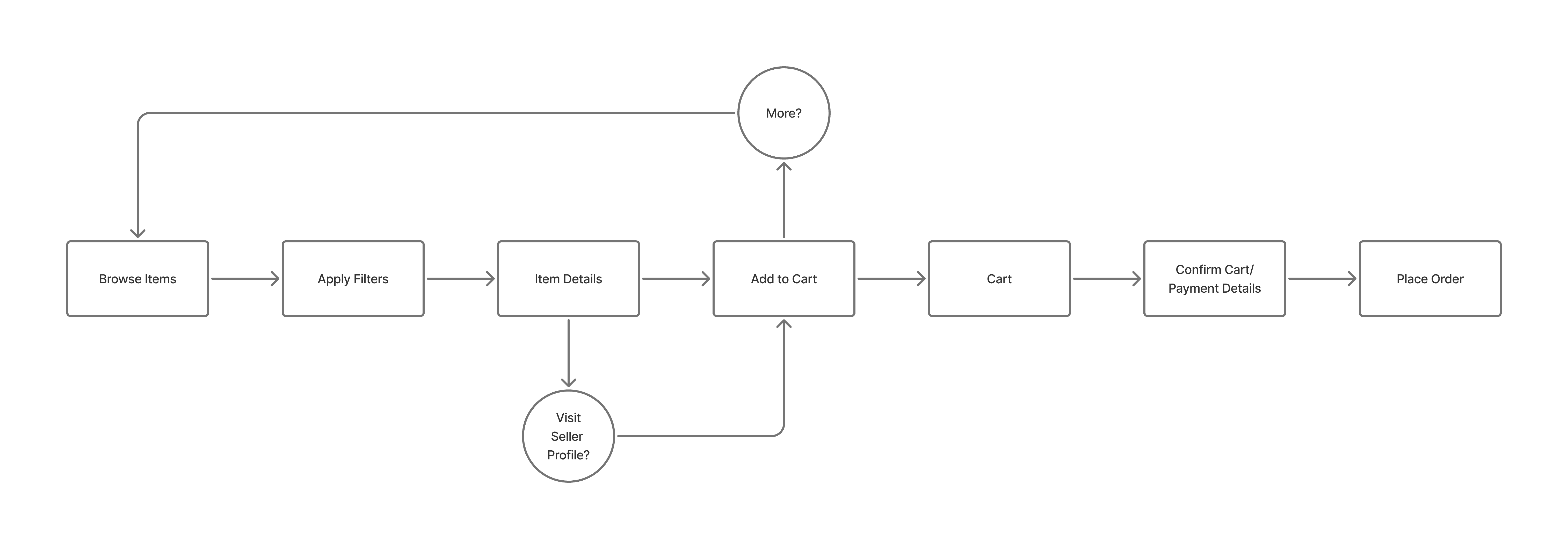
We wanted to make it clear to buyers that we are tailoring many different clothes to their specific needs and to help build trust within the community. However, trust goes both ways and thus we needed to think about how sellers would be able to navigate through their dashboard.
Basic Buyer Flow
Basic Seller Flow
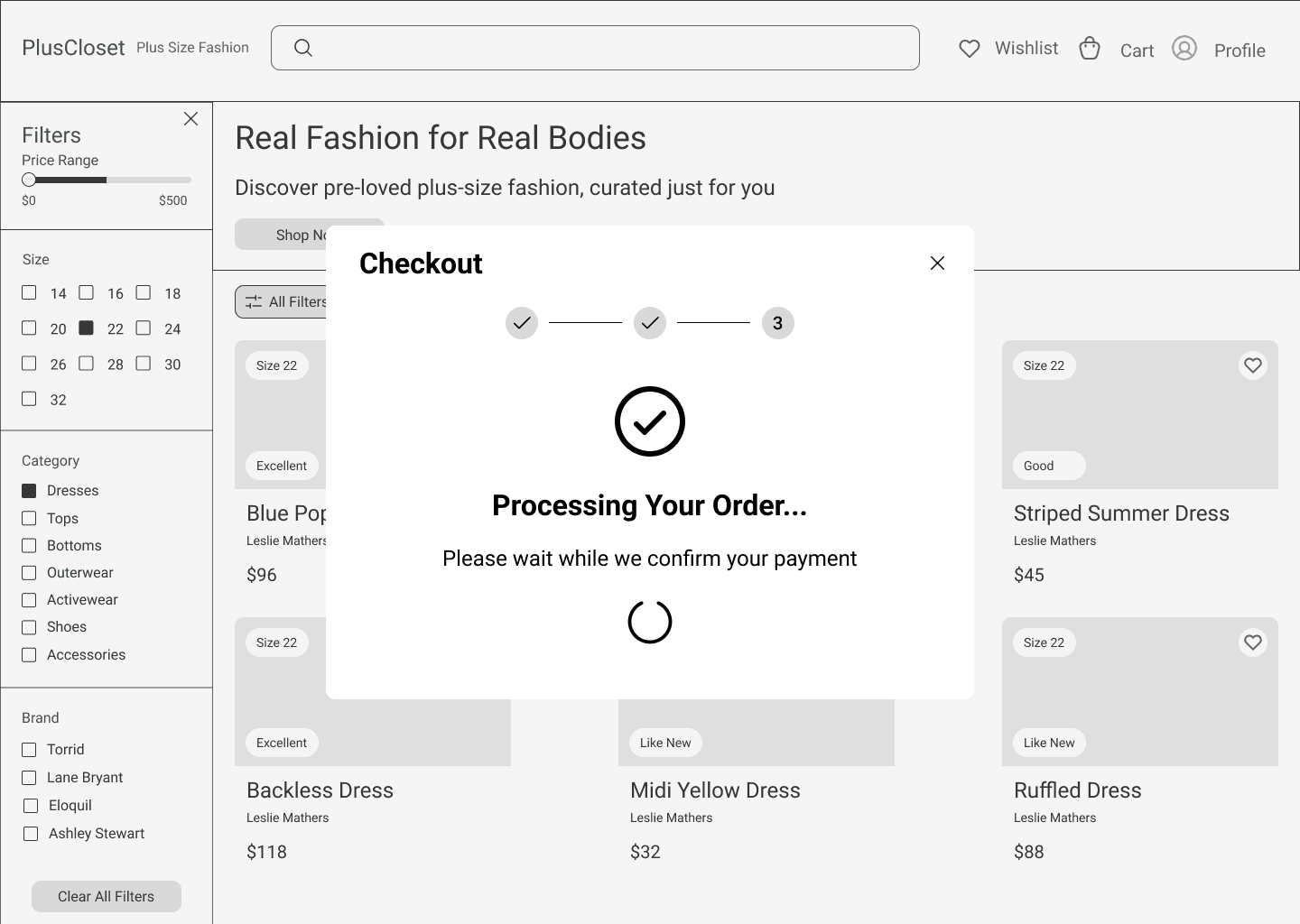
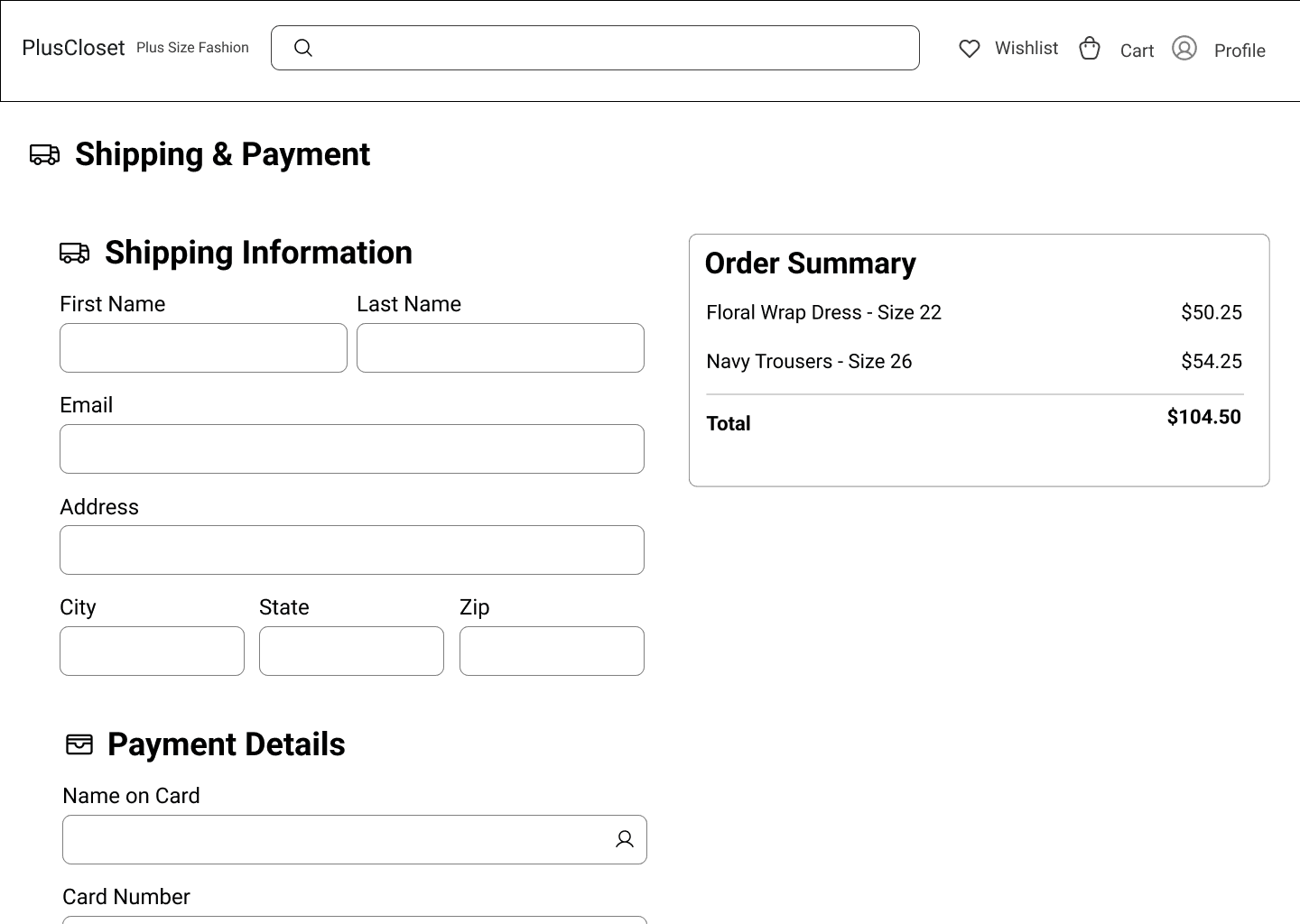
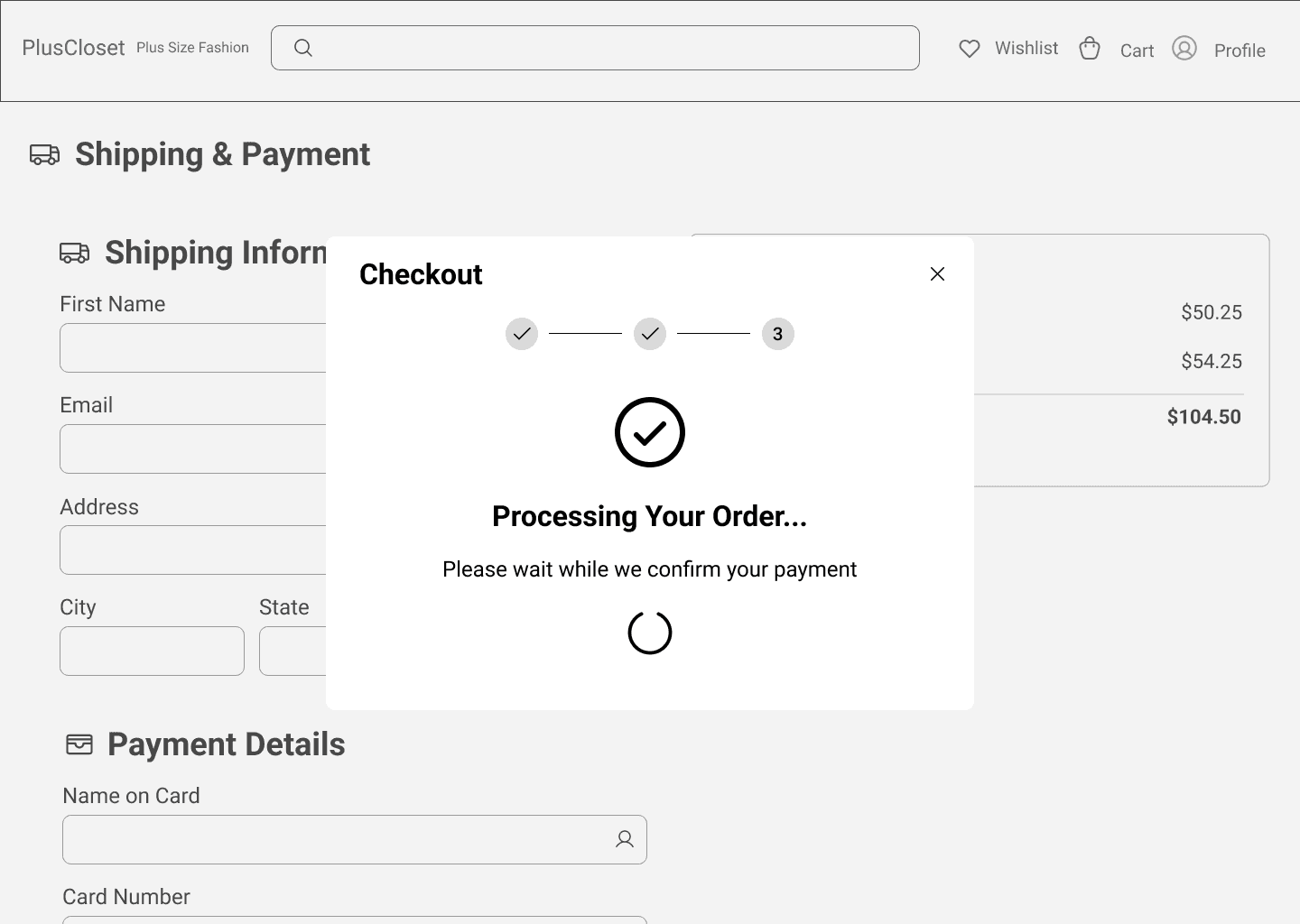
Early Designs
To get a proper idea of what our application will start to look like, we made started with a round of initial prototypes. Since we only had 1 week for this phase, we were only able to conduct 1 round of rapid prototyping.